






17. Mar 2025

Key Takeaways: HVO100 (Hydrotreated Vegetable Oil) is a paraffinic renewable diesel made by hydrotreating waste oils, fats, and vegetable-oil residues, and it works as a direct, no-modification drop-in replacement for fossil diesel in existing engines. Biofuel Express's HVO100 delivers up to 90% CO2 reduction compared to fossil diesel and remains usable down to -22°C, making it a practical switch for fleets that need lower emissions without new vehicles, new infrastructure, or downtime. Fleet operators evaluating the switch should understand three things before ordering their first delivery: how HVO100 differs chemically from diesel and biodiesel, what RED III compliance actually requires, and how the fuel performs through a full Nordic winter.
HVO100 is a paraffinic renewable diesel made entirely (100%) from Hydrotreated Vegetable Oil – a fuel produced by treating waste fats, used cooking oil, and vegetable-oil residues with hydrogen under heat and pressure until they become a clean-burning hydrocarbon chemically similar to diesel, but without the aromatics, sulfur, or biological instability that come with crude oil or first-generation biodiesel.
It sits in its own fuel category, defined by the European standard EN 15940 for paraffinic diesel fuel, separate from both the fossil diesel standard (EN 590) and the biodiesel/FAME standard (EN 14214). That distinction matters for fleet operators: HVO100 is not a blend, an additive, or a niche biodiesel variant. It's a finished, standard-compliant diesel substitute engineered to be used at up to 100% concentration in existing diesel engines.
The key characteristics that define HVO100:
A common misconception is that HVO100 is "just biodiesel with a different name." It isn't. Biodiesel (FAME) and HVO100 both start from similar renewable feedstocks, but the production chemistry – esterification for FAME versus hydrotreatment for HVO – produces two fuels with very different molecular structures, blending limits, and cold-weather behaviour, covered in detail later in this guide.
HVO first reached commercial fleet scale in the 2010s, led by producers such as Neste, and has since become the dominant renewable diesel technology across the Nordics, Germany, and Austria – markets where winter performance and drop-in engine compatibility make it a more practical fossil-diesel replacement than biodiesel for heavy-duty and long-haul operations.
The single biggest reason HVO100 matters right now: it lets a fleet cut CO2 emissions by up to 90% without buying new vehicles, retrofitting engines, or building new fuelling infrastructure. For an industry where the vehicle replacement cycle runs 5-10+ years, that's a decarbonisation lever available immediately, not a decade from now.
Regulatory pressure is accelerating this shift. The EU's Renewable Energy Directive III (RED III) raised the bloc's binding renewable-energy target for transport and tightened advanced-biofuel sub-targets through 2030 (International Energy Agency, RED III policy summary, accessed 2026). National policies are moving in the same direction. Sweden's greenhouse gas reduction mandate (reduktionsplikt) requires a 10% GHG reduction across diesel and petrol as of July 2025, and Germany's biofuels regulator (BAFA) began publishing HVO blending-share data for the first time in 2025 as the fuel's market share climbed (Argus Media, European HVO demand coverage, 2025).
For fleet operators specifically, ignoring this shift carries real cost: corporate customers increasingly require Scope 3 emissions data from logistics providers, tenders now weight sustainability criteria, and diesel-only fleets risk being priced out of contracts that reward documented emissions reductions. Getting HVO100 right – sourcing it from a certified supplier, understanding the compliance paperwork, and rolling it out without operational disruption – is now a competitive requirement for transport, logistics, construction, and public-sector fleets across Sweden, Denmark, Norway, Germany, and Austria.
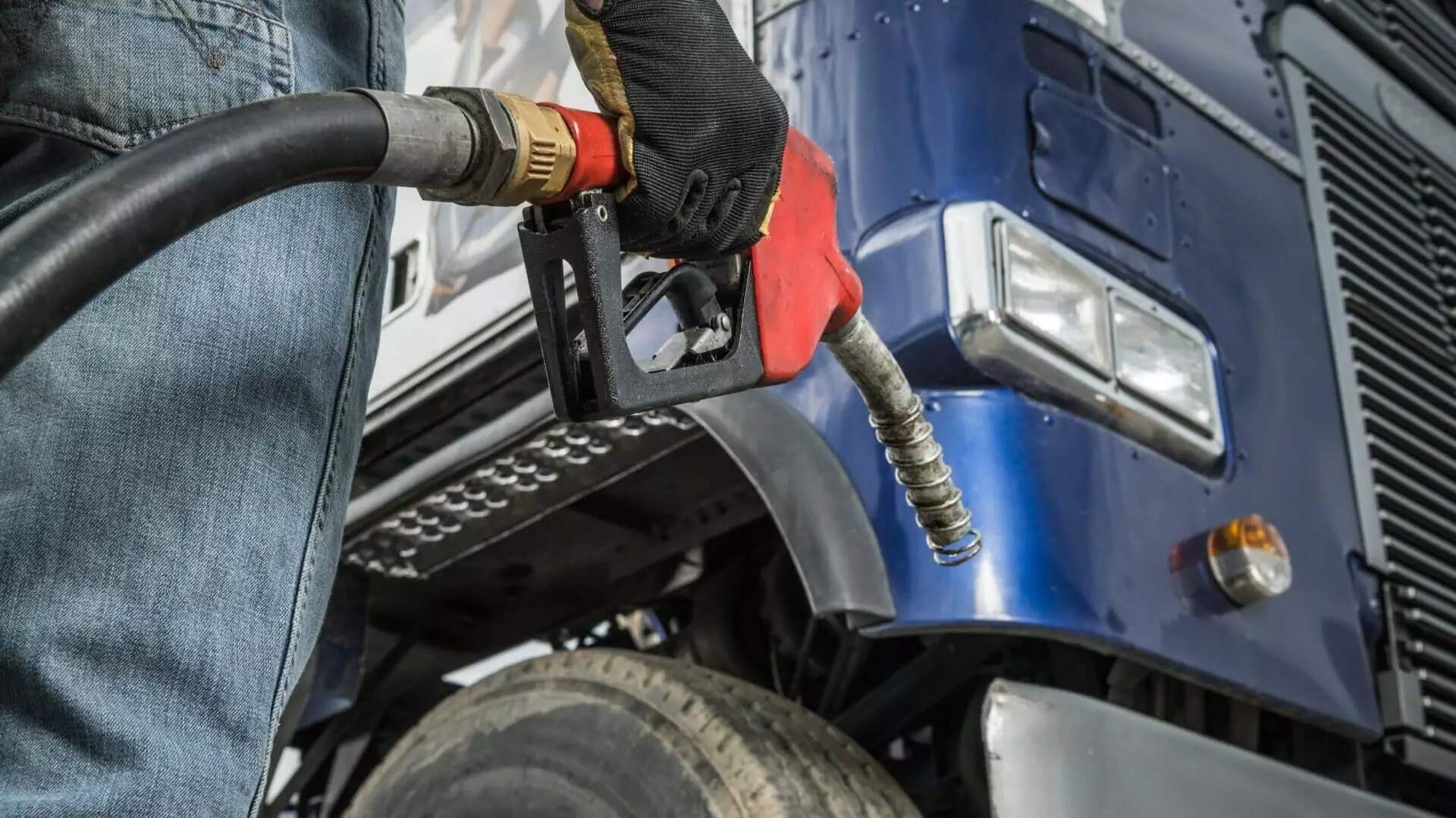
HVO100 starts as waste. The most common feedstocks are used cooking oil (UCO) collected from commercial kitchens and food processors, animal-fat residues from meat and rendering industries, and vegetable-oil processing residues – by-products that would otherwise be discarded, incinerated, or downcycled. Fresh, food-grade vegetable oil can technically serve as a feedstock too, but waste and residue streams dominate supply for sustainability and cost reasons. Neste, the largest global HVO producer, reports that waste and residue feedstocks made up 95% of its global renewable raw-material inputs in 2025 (Neste, "What is HVO, HVO100 & R99 renewable diesel", 2025).
These feedstocks go through hydrotreatment: a refinery process where the oil is reacted with hydrogen under high heat and pressure to strip out oxygen, remove double bonds, and break the molecule down into straight-chain paraffinic hydrocarbons – chemically similar to the hydrocarbons in fossil diesel, but built from a renewable carbon source. An optional isomerisation step follows to improve cold-flow properties, which is what gives HVO its strong winter performance relative to first-generation biofuels.

This process is what separates HVO from biodiesel (FAME), which is made through a completely different chemical reaction called transesterification. Hydrotreatment removes oxygen entirely; transesterification does not. That single difference cascades into nearly every practical distinction between the two fuels, covered next.
A common mistake fleet buyers make at this stage is assuming "renewable diesel" and "biodiesel" are interchangeable marketing terms for the same product. They aren't, and conflating them can lead to ordering the wrong fuel for a fleet's climate and equipment. For a deeper look at lesser-known technical and regulatory facts about how HVO is refined, certified, and traced through the supply chain, see Seven Things You May Not Know About HVO.
Fossil diesel (governed by the EN 590 standard) is a mix of hydrocarbons that includes aromatics – ring-shaped molecules that burn less cleanly and contribute to particulate emissions – along with trace sulfur left over from crude refining. HVO100 replaces that mixture with a near-pure paraffinic (straight-chain saturated) hydrocarbon structure that contains virtually no aromatics and negligible sulfur.
The practical differences fleet operators notice:
None of these differences require engine changes – they are precisely why HVO100 was engineered to meet the same EN 590 performance envelope that fossil diesel does, just from a renewable, cleaner-burning hydrocarbon base.
This is the comparison fleet buyers get wrong most often, and it matters enough to have its own dedicated explainer: HVO100 Renewable Diesel and B100 Biodiesel (RME) – Do You Know the Differences?.
Biodiesel – sold as B100, FAME, or RME (rapeseed methyl ester) – is made by transesterification: reacting fats or oils with an alcohol to produce fatty acid methyl esters. HVO100 is made by hydrotreatment, which removes oxygen entirely and produces paraffinic hydrocarbons instead of esters. That difference in chemistry drives three practical gaps fleet operators need to plan around:
The short version for a fleet buyer: HVO100 and biodiesel both cut lifecycle emissions versus fossil diesel, but HVO100's chemistry gives it broader engine compatibility, longer storage stability, and stronger cold-weather reliability, which is why it – not biodiesel – has become the default renewable-diesel choice for Nordic and Central European fleet operations.
The table below summarises the fuel-property differences covered in this and the previous section.
| Property | HVO100 (EN 15940) | Fossil Diesel (EN 590) | FAME Biodiesel (EN 14214) |
|---|---|---|---|
| Cetane number (minimum) | >70 (Class A) | 51 | 51 |
| Sulfur content | <1 mg/kg | ≤10 mg/kg | Not applicable (standard sets other purity limits) |
| Blend limit in standard diesel engines | Up to 100% | n/a (base fuel) | Up to 7% (B7) without a B100-approved vehicle |
| Oxidative storage stability | No FAME-style oxidation limit (no oxygen/double bonds) | n/a | Minimum 8-hour Rancimat stability required |
| Lowest reliable operating temperature | -22°C (Biofuel Express product data) | ≈-20°C with cold-flow additives | ≈-8°C best case |
| Engine modification required | None for approved diesel engines | n/a (base fuel) | None up to B7; B100 requires an approved vehicle |
Sources: IEA-AMF fuel properties reference; IEA-AMF fatty acid ester compatibility; DieselNet biodiesel standards summary (all accessed 2026); Biofuel Express product data for the HVO100 cold-weather figure.
The EU's Renewable Energy Directive III (RED III, in force since 2023) sets the regulatory framework that determines whether HVO100 counts towards a company's or country's renewable-energy and emissions targets. Two mechanics matter most for fleet operators:
First, RED III sets a combined 5.5% target for advanced biofuels and renewable fuels of non-biological origin within the transport sector by 2030, with an interim 1% target for 2025. It also applies a 2x multiplier towards that target for qualifying advanced feedstocks – an incentive structure that favours waste-based HVO production over crop-based alternatives (IEA, RED III policy database entry, 2023). Second, RED III retains a cap of 1.7% on certain Annex IX Part B feedstocks, including some used-cooking-oil-derived biofuels. That cap exists specifically to limit fraud risk from mislabeled or double-counted imported feedstock.
That fraud-risk point is not theoretical. Transport & Environment, a Brussels-based sustainability advocacy group, has published analysis questioning the traceability of some imported used-cooking-oil supply chains feeding into EU HVO production (Transport & Environment, "Where's your HVO been?"). This is a critics' assessment, not a regulator's finding, but it's a legitimate reason fleet buyers should ask suppliers for sustainability certification, not just a feedstock claim on a spec sheet. The standard proof points are ISCC (International Sustainability and Carbon Certification) or REDcert certification, which document a chain-of-custody audit trail back to the feedstock source and verify the GHG-savings calculation used to claim RED III compliance.
For a broader look at how HVO100's sustainability claims hold up – feedstock traceability, certification schemes, and what "sustainable" actually means for this fuel category – see How Sustainable Is HVO100?. Practically, this means a fleet operator should ask any HVO100 supplier for their ISCC or REDcert certificate and the specific GHG-savings percentage backing it, not just take a general sustainability claim at face value.
Cold-weather reliability is often the deciding factor for Nordic and Central European fleets choosing between renewable diesel options, and it's an area where HVO100's chemistry gives it a real advantage over biodiesel. Because HVO100 is a pure paraffinic hydrocarbon rather than an ester, refiners can adjust the isomerisation step of the hydrotreatment process to significantly improve its cold-flow properties without changing its cetane rating or combustion performance.
Biofuel Express's HVO100 is verified usable down to -22°C, giving fleets confidence to run it through a full Nordic winter without switching back to fossil diesel or blending in cold-flow additives. That's a meaningfully lower operating threshold than biodiesel (FAME), whose ester structure makes it more prone to wax crystallisation and filter plugging at temperatures well above what HVO100 can handle – one of the main reasons fleet operators in Sweden, Norway, and northern Germany default to HVO100 rather than biodiesel for winter operations. Independent technical references from the IEA's Advanced Motor Fuels programme confirm the general pattern. Paraffinic fuels like HVO can be engineered for substantially colder operability than conventional diesel or FAME, because their production process allows direct control over the wax-forming components in the fuel. That same reference puts typical winter-grade fossil diesel (with cold-flow additives) at roughly -20°C and best-case FAME biodiesel at roughly -8°C, both illustrated in the chart below (IEA-AMF, fuel properties reference, accessed 2026).
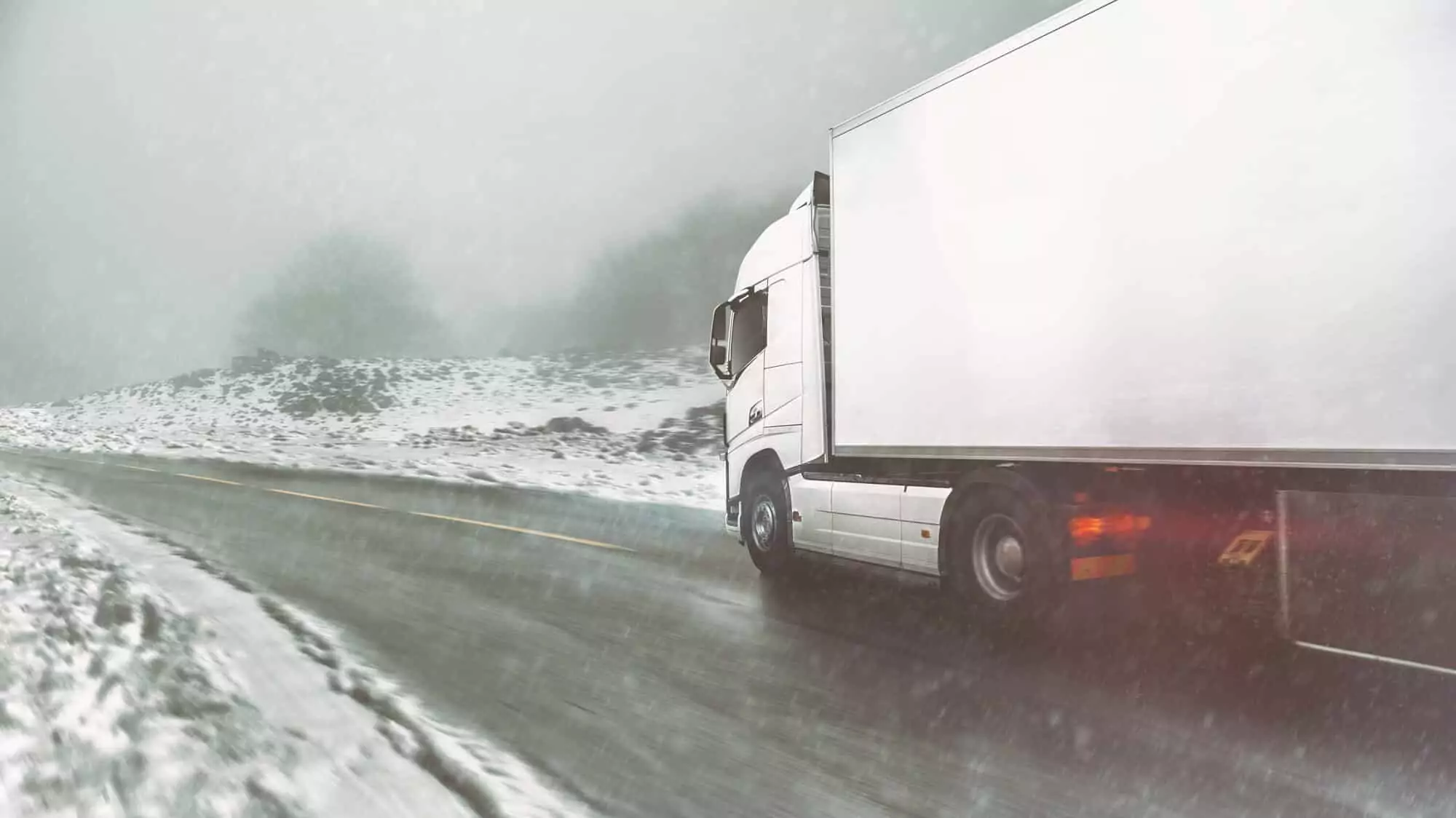
For fleet managers, the practical takeaway is simple: HVO100 does not require a seasonal fuel switch, a winter-blend additive package, or heated fuel-line retrofits the way biodiesel-heavy fuels sometimes do. It is delivered as a single, year-round fuel specification, which simplifies procurement and removes a seasonal operational risk from route planning.
Biofuel Express's HVO100 delivers up to 90% CO2 reduction compared with fossil diesel on a lifecycle basis. That figure is consistent with the broader HVO market: Neste, the industry's largest producer, reports up to 90% lifecycle greenhouse gas reduction for its equivalent HVO100 product under the EU's RED III calculation methodology (the figure is lower, up to 75%, under the different accounting rules used by California's Low Carbon Fuel Standard – a methodology difference, not a product difference) (Neste, official product FAQ, accessed 2026). Scania, whose Euro 6 engines are factory-approved for HVO100, cites a similar range of 50-90% CO2 reduction depending on feedstock, typically around 83% in practice (Scania Group, "Renewable fuels", accessed 2026).
Two things are worth understanding about that percentage rather than treating it as a single fixed number. First, it's a lifecycle figure – it accounts for feedstock production, collection, processing, and combustion, not just tailpipe emissions, which is why methodology (RED III vs. other regional frameworks) changes the reported number even for chemically identical fuel. Second, the reduction scales with feedstock: waste-based HVO (used cooking oil, animal-fat residues) delivers the highest reduction, which is why supplier transparency about feedstock mix – covered in the RED III section above – directly affects the emissions number a fleet can legitimately report to customers or regulators.
HVO100 is a drop-in fuel: it can be poured into an existing diesel tank and run through an unmodified diesel engine, with no conversion kit, no new injectors, and no software recalibration required. This is one of HVO100's biggest practical advantages over alternative-fuel options like electric or hydrogen fleets, which demand new vehicles and new infrastructure.
Major truck OEMs back this up directly. Scania states that "every Scania diesel vehicle is an HVO vehicle" – every Euro 6 Scania diesel engine is factory-approved to run on up to 100% HVO with no modification (Scania Group, "Renewable fuels", accessed 2026). Volvo Group has approved HVO renewable diesel for its diesel engines since 2015 (extended to Volvo Penta engines in 2016), and current Volvo Trucks materials state that all of its diesel engines are certified to run on HVO100 (Volvo Group, official newsroom, 2015; 2016 approval extension).
In practice, this means a fleet can switch a single vehicle, a single depot, or an entire fleet to HVO100 on a normal delivery schedule, with no downtime for retrofitting and no need to segregate "HVO-only" vehicles from the rest of the fleet, provided the engine manufacturer has issued an HVO approval (worth confirming for older or non-mainstream engine models – most Euro 5 and Euro 6 diesel engines from major manufacturers carry one). For a practical walkthrough of switching an operating fleet over without disrupting routes or maintenance schedules, see From Diesel to HVO100 Without Disruption.
The financial case for HVO100 rests on three factors: zero capital expenditure, fuel-economy parity with diesel, and a fuel price that typically carries a premium over fossil diesel but avoids the far larger capex and infrastructure costs of electric or hydrogen fleet conversion.
Zero capex. Because HVO100 is drop-in compatible (see above), there's no cost for new vehicles, engine retrofits, or new fuelling infrastructure – the single biggest cost advantage over battery-electric or hydrogen alternatives, which require new vehicle purchases and, often, new depot charging or fuelling infrastructure.
Fuel-economy parity. HVO100's slightly lower volumetric energy density than fossil diesel is offset in practice by its higher cetane number and cleaner combustion, so real-world fuel consumption is broadly comparable to diesel – fleets should not expect a meaningful mileage penalty from the switch.
Price premium and volatility. HVO100 typically costs more per litre than fossil diesel, and that premium moves with feedstock costs and national blending-mandate policy. Sweden's experience is a useful illustration. When the country's reduktionsplikt mandate was temporarily cut to the EU regulatory minimum, HVO oversupply pushed prices down sharply. When the mandate was raised back to 10% in July 2025, that policy reversal shifted the market again (Energimyndigheten, reduktionsplikt programme; Argus Media, Swedish mandate coverage, 2024-2025). This is a directional pattern, not a fixed number – fleet operators should request current, market-specific pricing rather than budgeting off a general industry figure, since premiums vary by country, contract volume, and delivery terms.
Set against that premium: no vehicle depreciation risk from a stranded-asset alternative-fuel purchase, immediate emissions reporting benefit for tenders and Scope 3 disclosures, and the ability to phase the switch in gradually, vehicle by vehicle, rather than making an all-or-nothing capital commitment. For fleets ready to move from evaluation to sourcing, Biofuel Express supplies certified HVO100 renewable diesel across Sweden, Denmark, Norway, Germany, and Austria – see the HVO100 renewable diesel product page for current specifications and delivery options. Ready to move from research to a business case? See This Is Why Your Company Needs Renewable Fuels for the full ROI and compliance picture.
If your fleet already runs a mix of engine ages and manufacturers, here's how to sequence the switch with the least operational risk.
Start by confirming HVO100 approval status for each vehicle model in the fleet. Most Euro 5 and Euro 6 diesel engines from major manufacturers carry a factory HVO approval, with Scania and Volvo Group's approvals documented above, but approval status varies by manufacturer and model year. Check older or specialty equipment individually against the OEM's own published fuel documentation before switching, to avoid warranty disputes later. Next, pilot the switch on a single depot or route before committing the full fleet, so operations and maintenance teams can validate real-world fuel economy and confirm there's no unexpected filter or injector behaviour specific to your operating conditions.
Because HVO100 is chemically compatible with fossil diesel at any blend ratio, fleets don't need to fully drain tanks before switching – a vehicle can transition mid-tank without flushing, which removes a common source of rollout delay. This compatibility has been documented in field-scale fleet transitions; see From Diesel to HVO100 Without Disruption for a route-by-route rollout approach used by operating fleets making the switch.
The most common rollout mistake is treating HVO100 as a like-for-like fuel swap without updating internal reporting: fleets that don't track HVO100 volumes separately from diesel miss the opportunity to document the CO2 reduction for tenders, ESG reporting, and customer-facing sustainability claims – which is often the commercial reason the switch was made in the first place.
Before signing a supply agreement, fleet operators should confirm four things with any HVO100 supplier: current ISCC or REDcert sustainability certification and the specific GHG-savings percentage it documents; feedstock transparency (waste/residue-based vs. crop-based, and the proportion of each); delivery reliability across the operator's specific depot locations, particularly for cross-border Nordic and DACH operations; and confirmation that the product meets EN 15940 in full, not a partial-blend product marketed loosely as "renewable diesel."
Biofuel Express supplies certified HVO100 renewable diesel to fleet operators across Sweden, Denmark, Norway, Germany, and Austria, with the CO2-reduction and cold-weather performance data cited throughout this guide reflecting our own product specifications. Fleet operators ready to move from research to a delivery quote can review current specifications, delivery areas, and ordering details on the HVO100 renewable diesel product page, or contact our team directly with questions specific to your fleet.

HVO100 stands for 100% Hydrotreated Vegetable Oil – a paraffinic renewable diesel produced by hydrotreating waste oils, fats, and vegetable-oil residues, used at full (100%) concentration rather than blended with fossil diesel.
No. HVO100 and biodiesel (FAME/B100/RME) both come from renewable feedstocks, but HVO100 is made by hydrotreatment and biodiesel by transesterification, producing different molecules with different blending limits, storage stability, and cold-weather performance. See the dedicated HVO100 vs. biodiesel comparison for the full breakdown.
Yes, for most modern diesel engines. HVO100 is a certified drop-in fuel under EN 15940, and major manufacturers including Scania and Volvo Group have approved their Euro 5 and Euro 6 diesel engines to run on up to 100% HVO with no engine or software modification. Always confirm approval status for older or specialty equipment before switching.
Biofuel Express's HVO100 delivers up to 90% CO2 reduction compared with fossil diesel on a lifecycle basis, a figure consistent with independently reported industry data from major producers and OEMs. The exact reduction depends on the feedstock mix used and the emissions-accounting methodology applied.
Yes. Biofuel Express's HVO100 is usable down to -22°C, making it suitable for full Nordic winter operation without a seasonal fuel switch or cold-flow additive package. Its paraffinic chemistry allows for better cold-weather engineering than biodiesel, which typically has a warmer cold filter plugging point.
HVO100 typically carries a price premium over fossil diesel that varies by market, feedstock cost, and national blending-mandate policy. There's no capital expenditure to switch, since it runs in existing engines, which offsets the fuel premium against the far larger cost of alternative-fuel vehicle purchases. Contact a supplier for current, market-specific pricing rather than budgeting off a general figure.
HVO100 is a paraffinic renewable diesel that fleet operators can adopt today, in existing vehicles, with no capital investment and up to 90% CO2 reduction compared with fossil diesel. It is chemically distinct from both fossil diesel and biodiesel, engineered for drop-in engine compatibility and strong cold-weather performance – two properties that make it the practical renewable-diesel choice for Nordic and Central European fleets specifically.
The path from here is straightforward: confirm your fleet's engine approvals, verify a supplier's sustainability certification and feedstock transparency, and pilot the switch on one depot or route before rolling it out fleet-wide. Every article linked throughout this guide goes deeper into one piece of that process.
Fundamentals:
Comparisons:
How-To:
Get a Quote:
"*" indicates required fields