






5. Sep 2022
Key Takeaways:
- Five EU policy threads now shape fleet costs and obligations at once: the Green Deal (umbrella target), RED III (renewable-fuel targets), EU ETS2 (carbon pricing on fuel from 2028), the HDV CO2 Standards Regulation (new-truck emissions targets), and NIS2 (cybersecurity obligations for transport as an "essential entities" sector).
- EU ETS2 was postponed by one year and now becomes fully operational in 2028, not 2027, following a Council and Parliament agreement reached in the 2040 climate target negotiations (European Commission, Climate Action, retrieved 2026-08-28).
- ETS2's likely cost impact on fossil diesel is roughly €0.12–0.25 per litre, depending on the carbon price scenario, based on current carbon-market pricing and the system's built-in cost-containment mechanism.
- The HDV CO2 Standards Regulation raises the 2030 new-truck CO2 target to a 45% reduction (versus the original 30%), adds 65% by 2035 and 90% by 2040, and now covers roughly 92% of 2023 heavy-duty sales (ICCT, May 2024) – a direct input into fleet renewal and vehicle-purchasing decisions.
- NIS2 is a cybersecurity directive, not a climate regulation, but transport is named an "essential entities" sector under it, meaning many fleet operators and their digital suppliers (telematics, fleet-management software, EDI) now face binding risk-management and incident-reporting obligations – a compliance gap most fleets have not yet mapped.
EU climate regulations for transport today are not one law but five interlocking ones: the European Green Deal (the umbrella policy goal), RED III (renewable-fuel targets), EU ETS2 (carbon pricing on road-transport fuel), the HDV CO2 Standards Regulation (new-truck emissions limits), and – standing slightly apart from the other four – NIS2, a cybersecurity directive that names transport as a critical sector. Most fleet buyers encounter these piecemeal, through a supplier's compliance note here or a trade-press headline there, without ever seeing how the pieces fit together.
That fragmentation is exactly what this guide exists to fix. Each of these five threads has its own dedicated article on Biofuel Express's Knowledge Hub, covering the technical detail; this page is the map that shows how they connect, what changed most recently, and what a logistics or transport decision-maker needs to do about each one.
The essential facts about this regulatory landscape:
A common misconception is that these are five separate compliance projects. In practice, they are five inputs into two decisions every fleet already makes: what fuel to buy, and what vehicles to buy. The sections below cover each thread at the depth a decision-maker needs, then bring them together into a single compliance strategy.
The single biggest reason this matters right now: three of these five regulatory threads have shifted meaningfully in the past 18 months, and a fleet's fuel and vehicle strategy built on 2024 assumptions is already out of date. ETS2 slipped a year, the HDV CO2 targets got sharply tighter, and NIS2's national transposition deadline has already passed in most member states.
The consequences of not tracking this are concrete rather than abstract. A fleet buying trucks today without accounting for the 2030 HDV CO2 target risks a less competitive resale value and tighter manufacturer allocation of the most efficient models as the target year approaches. A fleet budgeting fuel costs without accounting for ETS2's 2028 start risks a cost shock precisely when contracts renew. And a mid-sized logistics operator that has never heard of NIS2 may already be in scope as an "important entity" – or be asked to prove its cybersecurity posture by a larger customer who is.
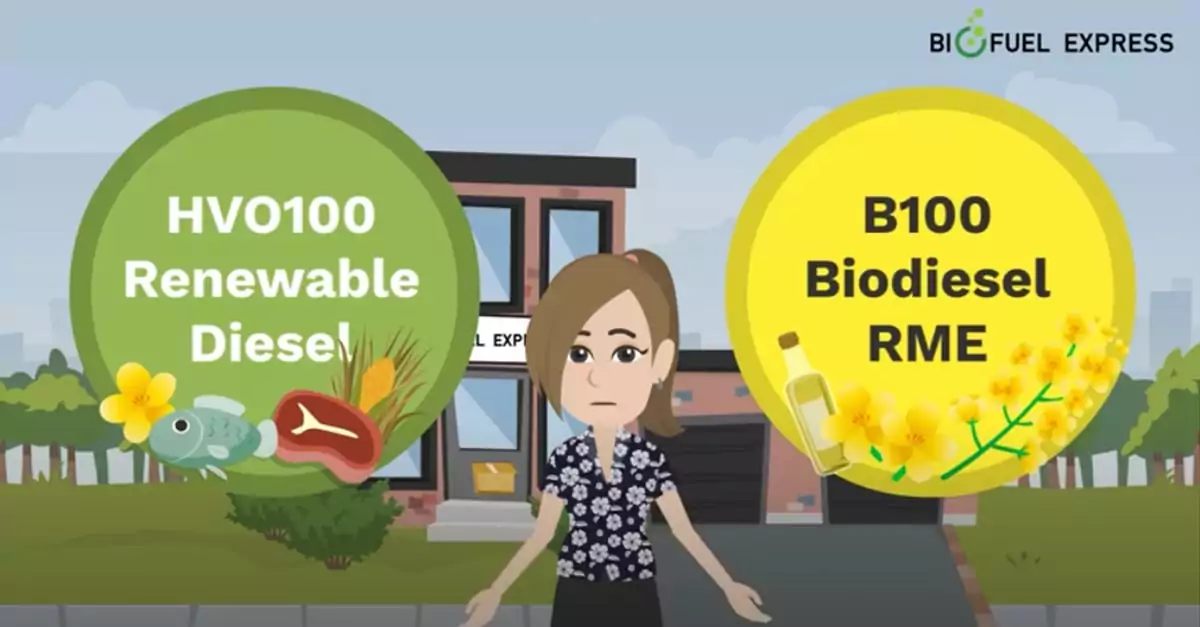
There is also a genuine opportunity side to this, not just a compliance burden. Fleets that source RED III-compliant renewable fuels such as HVO100 or B100 today are already ahead of ETS2's cost pressure on fossil diesel, since renewable fuels sit outside the fossil-fuel carbon-pricing exposure that ETS2 introduces. For the sustainability case underpinning that choice, see Biofuel Express's sustainability overview. Getting ahead of this landscape starts with understanding the umbrella framework everything else sits under – the Green Deal – covered next.
The European Green Deal is the EU's overarching climate strategy: legally binding commitments to cut net greenhouse gas emissions by at least 55% by 2030 (versus 1990 levels) and reach climate neutrality by 2050, set out in the European Climate Law (Council of the EU, "Fit for 55", retrieved 2026-08-28). RED III, ETS2, and the HDV CO2 Standards Regulation are not independent initiatives; they are the transport-sector delivery mechanisms for this single target, adopted together under the "Fit for 55" legislative package that the Commission proposed in July 2021 and which entered into force in October 2023.
For transport specifically, the Green Deal set out a target to cut transport emissions by 90% by 2050 and named road transport as the sector requiring the most policy intervention, since it remains one of the few sectors where EU emissions have not fallen substantially against 1990 levels (European Commission, "Transport and the Green Deal", retrieved 2026-08-28). That single fact explains why transport carries three separate major instruments (RED III, ETS2, HDV CO2 standards) where some other sectors carry one.
Understanding this hierarchy matters practically: when any of the three transport-specific instruments below get revised – and the HDV CO2 Standards Regulation already has been, once, in 2024 – the direction of travel is set by the Green Deal's 2030 and 2050 targets, not by the instrument in isolation. A fleet operator who understands the umbrella target can reasonably anticipate which way future revisions will move, even before the legislative text changes. For the full breakdown of what the Green Deal specifically requires of the transport sector, see The EU Green Deal: Implications for the Transport Sector.
RED III (the Renewable Energy Directive III, in force since 2023) sets the framework that determines whether a renewable fuel counts towards a country's or company's transport-sector targets. Because Biofuel Express's HVO100 and biodiesel guides already cover RED III's fuel-specific mechanics in full depth, this section gives the framework-level summary a fleet buyer needs before those deeper pages, rather than re-deriving figures already published elsewhere on this site.
At the top level, RED III requires EU member states to choose between two 2030 transport targets: a binding 29% share of renewables in transport final energy consumption, or a 14.5% cut in transport greenhouse gas intensity – more than double the ambition of the preceding RED II directive, which set the equivalent share at 14% (ICCT, "Provisions for Transport Fuels in Fit for 55", July 2023). Underneath that headline figure sit the sub-targets that actually govern which fuels qualify and how they're weighted:
These mechanics are not abstract for a fuel-purchasing decision: they are the reason HVO100 and B100/RME carry different regulatory profiles even though both cut lifecycle emissions substantially against fossil diesel. For HVO100's fuel-specific RED III compliance detail – including how the 2x advanced-feedstock multiplier applies in practice – see What Is HVO100? The Complete Guide for Fleet Operators. For biodiesel's fuel-specific treatment – particularly the 7% crop cap's practical effect on B100/RME sourcing – see What Is Biodiesel? The Complete Guide to B100 and RME. Both fuels require the same proof point regardless of which side of these caps they sit on: ISCC or REDcert sustainability certification documenting a verified chain of custody and GHG-savings calculation – see Biofuel Express's certifications page for what to ask a supplier for. For the full legislative history from RED II through RED III, see The Renewable Energy Directive: RED II and RED III, Paving the Way for a Greener Future.
EU ETS2 is a second, separate emissions trading system that extends carbon pricing to fuel used in buildings, road transport, and additional sectors – distinct from the original EU ETS, which covers power generation and heavy industry. It becomes fully operational in 2028, having been postponed by one year from its originally planned 2027 start date, following a Council and Parliament agreement reached during the EU's 2040 climate target negotiations concluded in December 2025 (European Commission, Climate Action, "ETS2: Buildings, Road Transport and Additional Sectors", retrieved 2026-08-28; Council of the EU, provisional agreement on the ETS2 market stability reserve, 11 June 2026).
ETS2 does not charge fleets or households directly. It's an "upstream" system: fuel suppliers – the companies putting fossil fuel into circulation – are the regulated entities that must hold a permit and surrender allowances corresponding to the emissions embedded in the fuel they supply. This is the "mandatory CO2 reporting" mechanism referenced in earlier Biofuel Express communications on this topic: it's a monitoring, reporting, and verification (MRV) obligation that sits on fuel suppliers, not on individual fleets, though its cost is expected to be passed through to the pump price fleets pay.
To limit how sharply that pass-through can spike, ETS2 includes a market stability reserve: if the carbon price exceeds €45 per tonne of CO2 (in 2020 prices) during the system's early years, additional allowances are released to cool the price. A November 2025 Commission proposal, now provisionally agreed, doubles the volume released per intervention to 40 million allowances and allows the safeguard to trigger twice a year, extending its effect beyond 2030 (Council of the EU, 11 June 2026). Alongside ETS2, the EU has established a Social Climate Fund, expected to mobilise at least €86.7 billion between 2026 and 2032 – financed by ETS2 auction revenue plus existing-ETS allowances and member-state co-financing – specifically to cushion the cost impact on vulnerable households and micro-enterprises facing energy or transport poverty (European Commission, Climate Action, retrieved 2026-08-28).
At a carbon price of €45 per tonne – the market stability reserve's trigger threshold – carbon-market analytics firm Veyt estimates roughly €0.11–0.12 per litre added to diesel. At 2025 ETS2 futures pricing of around €73 per tonne, Veyt's estimated impact rises to roughly €0.13–0.14 per litre (Veyt, carbon market analytics, 2026). Only at the top of modelled carbon-price ranges, around €100 per tonne, do most published estimates approach €0.25 per litre. Carbon prices within ETS2 itself are forecast in the €45–80 per tonne range by 2030, placing most credible cost-per-litre estimates between €0.11 and €0.20. This guide will update these figures as ETS2's 2028 launch approaches and firmer pricing data becomes available.
Two things follow for a fleet's cost planning. First, ETS2's pass-through only applies to fossil fuel – renewable fuels such as HVO100 and B100 sit outside a fossil-fuel carbon-pricing mechanism, so a fleet already running on renewable fuel does not face this specific cost exposure on the volumes it has switched. Second, because the launch date and price trajectory have already shifted once, any fuel-cost forecast built on 2027-launch, worst-case assumptions should be revisited now that 2028 and the €45–80 range are the better-supported planning figures. For the fuller policy and market analysis of ETS2's road-transport impact, see What Are the Impacts of ETS Expansion on Road Transport?
The HDV CO2 Standards Regulation sets mandatory average CO2 reduction targets that truck and bus manufacturers must hit across their new-vehicle sales – it governs what manufacturers can sell, not what an individual fleet must buy, but it directly shapes which vehicles are available and how they're priced as the target years approach. The original regulation, Regulation (EU) 2019/1242, set targets of 15% by 2025 and 30% by 2030 against a baseline measured from new-vehicle sales between 1 July 2019 and 30 June 2020.
That 2030 target has since been substantially raised. Following a Commission proposal in February 2023, the European Parliament approved a revision on 10 April 2024, and the Council formally signed off on 13 May 2024 (Council of the EU, press release, 13 May 2024; ICCT, "The Revised CO2 Standards for Heavy-Duty Vehicles in the EU", May 2024). The revised targets keep the 15% figure for 2025 but raise the 2030 target to 45%, and add two new milestones: 65% by 2035 and 90% by 2040. The revision also widened the vehicles covered. Smaller trucks, urban buses, coaches, and trailers are now included alongside the large trucks the original 2019 regulation targeted, bringing roughly 92% of 2023 heavy-duty vehicle sales under the regulation, up from a substantially narrower scope before. Urban buses carry their own, sharper trajectory: a 90% zero-emission sales target by 2030, rising to 100% by 2035.
For a fleet operator, the practical read-through is straightforward: manufacturers are now engineering towards a materially steeper emissions curve than they were before May 2024, which means the most efficient diesel and alternative-powertrain models will become progressively harder to source outside the compliant range as 2030 approaches, and residual values on older, less efficient trucks are likely to soften faster than historical depreciation curves suggest. Reviewing fleet renewal timelines against this schedule – rather than against the pre-2024 assumption of a 30% 2030 target – is worth doing now, not at the next scheduled procurement cycle. The Commission is required to review the regulation's effectiveness again in 2027, so a further tightening before 2030 is plausible. For a deeper look at how these standards apply model-by-model and what compliant vehicle classes look like today, see CO2 Emission Standards for New Heavy-Duty Vehicles.
NIS2 – the Network and Information Security Directive 2, formally Directive (EU) 2022/2555 – is not a climate or emissions regulation at all. It's the EU's cybersecurity and critical-infrastructure-resilience directive, and it belongs in this guide for one reason: transport is explicitly named a high-criticality "essential entities" sector under it (alongside energy, banking, health, water, and digital infrastructure), which means many fleet and logistics operators now carry binding legal cybersecurity obligations they may not know about. This is a confirmed gap across Biofuel Express's Knowledge Hub – no existing article covers it – and it deserves the same rigour as the emissions-focused threads above.
NIS2's transport sector coverage is broad by design: road carriers, rail operators, airports and port authorities, and inland waterway transport companies are all named subsectors, alongside postal and courier services as a related subsector (Plan Be Eco, "NIS2 for the Transport and Logistics Industry", retrieved 2026-08-28). Classification into "essential" or "important" status runs primarily on organisation size, applied within these named high-criticality sectors. Under Article 3 of the directive, entities in these sectors that exceed the EU's medium-sized-enterprise ceiling (more than 250 employees, or turnover above €50 million, or a balance sheet total above €43 million) are classed as essential entities; those that qualify as medium-sized enterprises within the same sectors (broadly, 50 or more employees or turnover above €10 million) are classed as important entities (Directive (EU) 2022/2555, Article 3, via EUR-Lex). A small operator can still be pulled into essential status regardless of size if it is the sole provider of a service critical to national infrastructure – a single port terminal operator, for instance.
Because NIS2 is a directive rather than a directly applicable regulation, each member state transposes it into national law separately, and the exact thresholds and sector definitions can vary at the margins by country. Member states were required to adopt and publish their national transposition measures by 17 October 2024, applying from 18 October 2024, though implementation has been uneven: only a handful of countries met the deadline outright, and enforcement approaches are still maturing across the bloc. A fleet operator should check its own country's transposing legislation rather than assume the directive's baseline thresholds apply unmodified.
| NIS2 Classification | Typical Size Threshold | Supervisory Posture |
|---|---|---|
| Essential entity | More than 250 employees, or turnover above €50 million (or balance sheet above €43 million) | Proactive supervision; can be audited without a prior incident |
| Important entity | At least 50 employees, or turnover above €10 million | Reactive supervision; typically reviewed after an incident or complaint |
| Below-threshold operator | Fewer than 50 employees and under €10 million turnover | Not directly in scope, but may face supply-chain requirements from essential/important customers |
Thresholds summarised from Directive (EU) 2022/2555, Article 3 (EUR-Lex), with transport-sector context from Plan Be Eco; confirm exact figures against your own member state's transposing law, since national implementation varies.
Entities in scope must implement risk-management measures covering supply-chain security, network security, access control, and incident-handling procedures. The obligation with the sharpest deadlines is incident reporting, required in three stages under Directive (EU) 2022/2555, Article 23 (EUR-Lex): an early warning within 24 hours of becoming aware of an incident, a fuller incident notification within 72 hours, and a final report no later than one month after the notification, extendable with a progress report if the incident is still unresolved (plain-language summaries corroborated via nis-2-directive.com and isms.online, retrieved 2026-08-28). Penalties for essential entities can reach €10 million or 2% of global annual turnover, whichever is higher; for important entities, €7 million or 1.4% of turnover.
Two things make NIS2 relevant even to fleet operators who assume "we're not a tech company." First, modern fleet operations run on exactly the kind of networked systems NIS2 targets: telematics platforms, GPS and route-optimisation software, digital tachograph data, and EDI links to customers and customs systems. That dependency makes transport a genuinely high-risk sector for the kind of disruption NIS2 is designed to prevent, not an edge case swept in by an overbroad definition. Second, NIS2 includes supply-chain security obligations. An essential or important entity must assess the cybersecurity posture of its suppliers, which means a smaller haulier or logistics subcontractor below the direct size threshold can still be asked, contractually and not just informally, to demonstrate cybersecurity controls by a larger customer who is in scope. Falling under the size thresholds is not, in practice, the same as being unaffected by NIS2.
The most useful way to act on five regulatory threads at once is to work through them in the order they actually bind a fleet's decisions, rather than by legislative complexity or news-cycle attention.
For a deeper walkthrough of how renewable fuel sourcing specifically supports this kind of multi-regulation compliance strategy, see How Renewable Fuels Help Navigate Regulations. Biofuel Express's team can also work through fuel sourcing and RED III documentation directly with a fleet's compliance timeline – see contact to start that conversation. Ready to act on this compliance picture? See This Is Why Your Company Needs Renewable Fuels for the business case behind making the switch.

For fleets already tracking each regulation individually, the more advanced question is how they interact – because the interactions, not the individual rules, are where the real strategic decisions sit.
The clearest interaction is between ETS2 and RED III: as ETS2's carbon cost lands on fossil diesel from 2028, the relative cost gap between fossil diesel and RED III-compliant renewable fuels narrows from the fossil-diesel side, strengthening the economic case for the fuel switch independent of any sustainability argument. A fleet that has already made that switch ahead of 2028 effectively locks in today's smaller cost gap rather than absorbing tomorrow's larger one.
A second interaction sits between the HDV CO2 Standards Regulation and fuel choice: because the regulation is measured on vehicle-level CO2 output at the tailpipe under current methodology, it creates a structural pull towards zero-tailpipe-emission vehicles for manufacturers' compliance averaging, even though renewable liquid fuels like HVO100 deliver comparable lifecycle emissions reductions in the vehicles already on the road today. Fleets running renewable fuels in existing diesel engines should expect continued policy attention on how liquid renewable fuels are credited in vehicle-level standards, since this is an active area of debate in Brussels rather than a settled question.
This kind of cross-instrument literacy has a real prerequisite: a company generally needs a working compliance function that already tracks two or more of these threads before layering in the third or fourth. Fleets earlier in that maturity curve should treat the sequential strategy in the section above as the higher-priority starting point.
No. The original EU ETS covers power generation and heavy industry and has operated since 2005; ETS2 is a separate system extending carbon pricing to fuel used in buildings, road transport, and additional sectors, becoming fully operational in 2028 (European Commission, Climate Action, retrieved 2026-08-28).
No. ETS2 is an upstream system: fuel suppliers hold the obligation to surrender allowances for the fuel they place on the market, and that cost is expected to be passed through to the price fleets pay at the pump, rather than fleets reporting or surrendering allowances themselves.
No. The HDV CO2 Standards Regulation sets targets for manufacturers' new-vehicle sales averages, not for vehicles already registered and in service. Its effect on an existing fleet is indirect – through vehicle availability, pricing, and residual values – rather than a direct compliance requirement on vehicles already owned.
Likely yes, at least as an "important entity," since NIS2's general threshold for that category is 50 or more employees or turnover above €10 million within a named high-criticality sector such as transport. Confirm the exact position against your specific member state's transposing legislation, since implementation details vary by country, and note that even below-threshold operators can face supply-chain security requirements from larger, in-scope customers.
Yes, for the volumes switched. ETS2's carbon-pricing mechanism applies to fossil fuel; a litre of RED III-compliant renewable fuel used in place of fossil diesel does not carry the same fossil-fuel carbon-pricing exposure, which is one of the reasons the cost gap between renewable and fossil fuel is expected to narrow after ETS2 launches in 2028.
The single most important takeaway from this guide: EU climate and cybersecurity regulation for transport is no longer five separate compliance projects – it's one interconnected landscape that touches fuel purchasing, vehicle purchasing, and IT risk management at the same time, and it has already moved meaningfully in the past 18 months. ETS2 now launches in 2028, not 2027; the HDV CO2 targets are sharply tighter than the original 2019 regulation; and NIS2's transposition deadline has already passed in most member states, whether or not a given fleet has mapped its own exposure yet.
None of these threads works in isolation, and treating them that way is the most common – and most costly – mistake a fleet or logistics decision-maker can make. The compliance strategy above sets out a practical order of operations: fuel first, because it's the fastest lever; vehicle procurement next, because the HDV curve is already tightening; NIS2 assessment in parallel, because its deadlines don't wait for emissions planning to finish. Biofuel Express's contact page is the starting point for working through fuel sourcing and RED III documentation against your fleet's specific timeline.
This guide is compiled and maintained by Biofuel Express from primary EU legislative texts (via EUR-Lex and the European Commission's own Climate Action pages) and named tier 1-3 industry analysis, and it will be revised as the underlying regulations – particularly ETS2's pricing data and the Commission's 2027 review of the HDV CO2 Standards Regulation – develop further.
Fuel-Specific Compliance:
Regulatory Deep Dives:
Strategy and Sourcing:
"*" indicates required fields