






31. Aug 2026

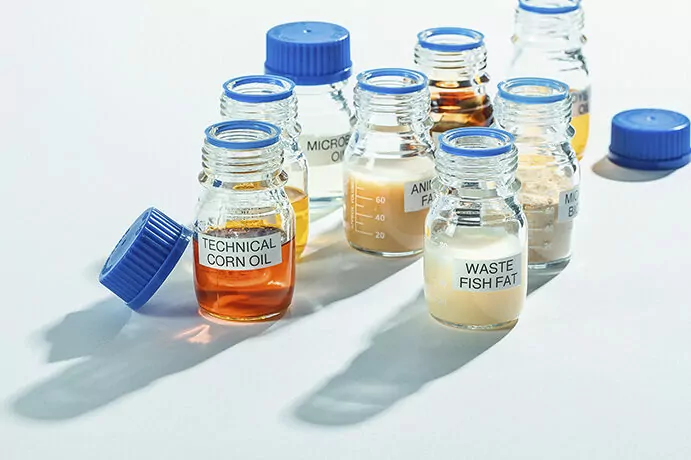
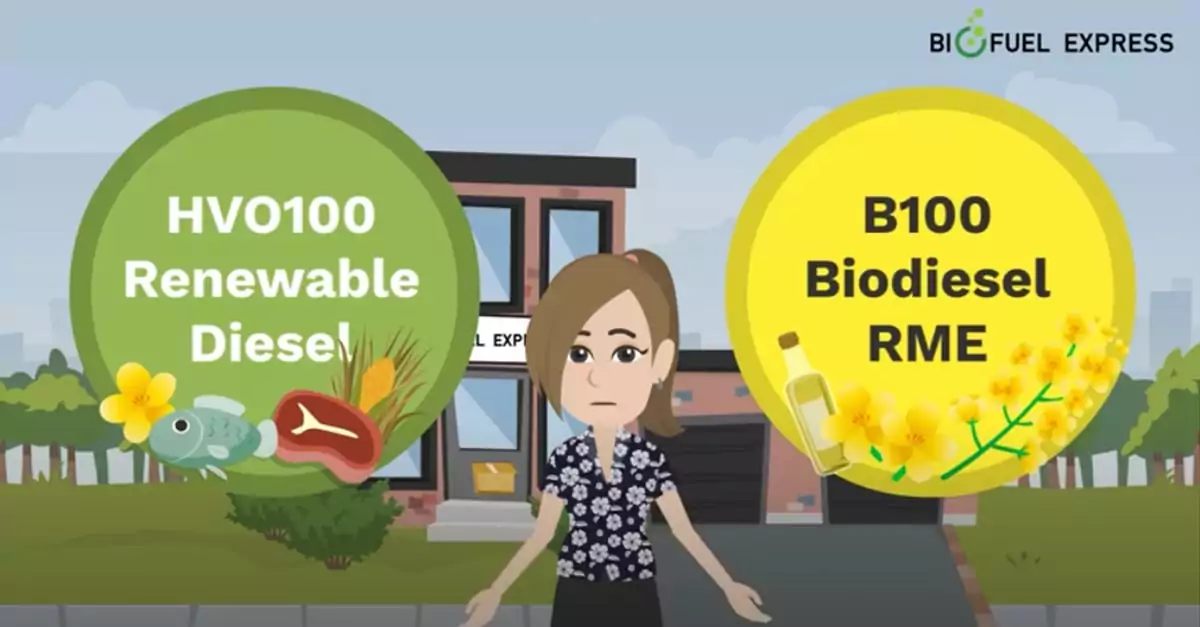
HVO100 is a renewable diesel made from 100% renewable feedstocks such as:
• Waste and residues (e.g., used cooking oil, animal fats)
• Vegetable oils (e.g., rapeseed)
• By-products from agriculture and food production
For a complete breakdown of what HVO100 is, how it's made, and how it compares to fossil diesel and biodiesel, see our complete guide to HVO100.
The production process involves hydrotreatment — a refining process where feedstocks are treated with hydrogen under high pressure to remove oxygen and impurities. The result is a high-quality paraffinic fuel that is chemically identical to fossil diesel but reduces well-to-wheel greenhouse gas emissions by up to 86%*, based on RED III lifecycle data.
HVO100’s overall footprint depends largely on the sourcing of raw materials. Waste- and residue-based feedstocks minimise competition with food production and land-use change, as they make use of by-products that would otherwise go to waste. Non-food vegetable oils, such as rapeseed oil, also carry a lower footprint when sourced responsibly from certified farms.
Sustainability Factors:
The production of HVO100 involves a chemical process called hydrotreatment, where feedstocks are treated with hydrogen at high temperatures and pressures. This process creates a stable, high-quality fuel that meets strict European fuel standards (EN 15940).
Environmental Impact:

HVO100 benefits from existing diesel infrastructure, making it easy to distribute and store. It can be transported through existing fuel pipelines and delivered using traditional tanker trucks. It is fully compatible with standard diesel storage facilities and fuelling stations. There is no need for specialised handling or safety precautions, as HVO100 behaves just like conventional diesel.
Sustainability Factors:
HVO100 is a drop-in fuel, meaning it can be used directly in diesel engines without any modifications. Its performance characteristics are often superior to those of fossil diesel. It has a higher cetane number, which leads to better combustion and improved engine efficiency. HVO100 also produces lower particulate emissions, resulting in cleaner burning that helps reduce air pollution and engine wear. Additionally, it performs well in cold weather thanks to its paraffinic nature.
Carbon Savings:
HVO100 is regulated under the Renewable Energy Directive (RED III) in the EU, which sets sustainability criteria for biofuels:
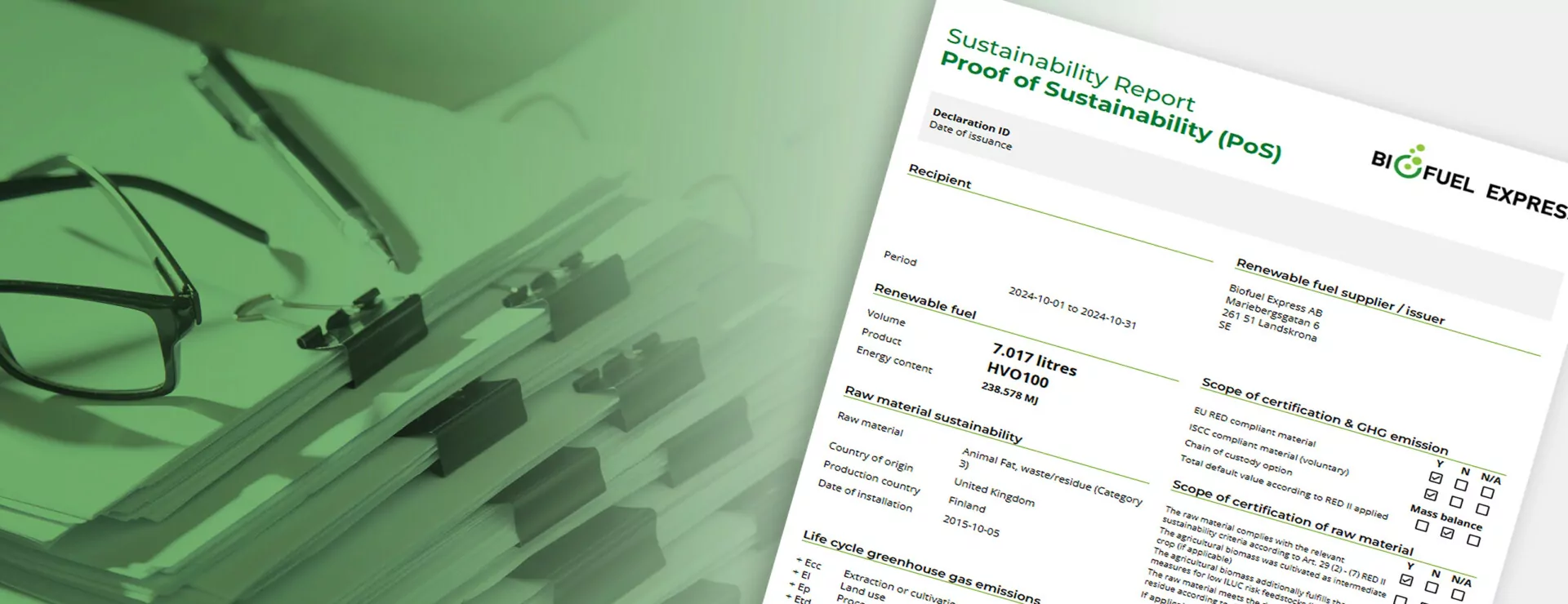
Producers and suppliers of HVO100 are increasingly seeking third-party certification to provide transparency and reassure customers about the sustainability of their products.
Immediate CO₂ savings
HVO100 is one of the fastest ways to decarbonise transport without major investment in new technology.
Ease of transition
No need for infrastructure or vehicle modifications.
Improved engine efficiency
Lower maintenance costs and improved fuel economy.
Regulatory compliance
Meets EU emission targets and future carbon reduction requirements.
Customer preference
Many customers are now prioritising transport providers that can document their fuel emissions.
Contact Biofuel Express to learn how we can support your transition to renewable fuels and help you meet your emissions-reduction targets.
* Based on 2025 verified delivery data. Actual reduction per delivery ranges from 57% to 121% depending on feedstock composition and certified batch. Calculated per the RED III well-to-wheel life-cycle methodology using ISCC-certified mass balance allocation. Proof of Sustainability (PoS) documentation available on request.
"*" indicates required fields