To ensure a safe transition to a fossil-free operation, it is essential for us that everything is certified in terms of traceability and not least provide valid documentation that creates insight into the climate impact of the products. Our fuels are produced from renewable resources, which are regenerated in a short time, rather than fossil fuels that spend millions of years when it comes to the carbon cycle.
In this regard, we have also created Biofuel Express Insight, as an extra service for our customers, where it is possible to gain even greater insight into your company’s fuel consumption through e.g. sustainability reporting, an overview of your CO2 reduction, the exact raw materials that are in your fuel, and documentation that you can use to create transparency for your customers.

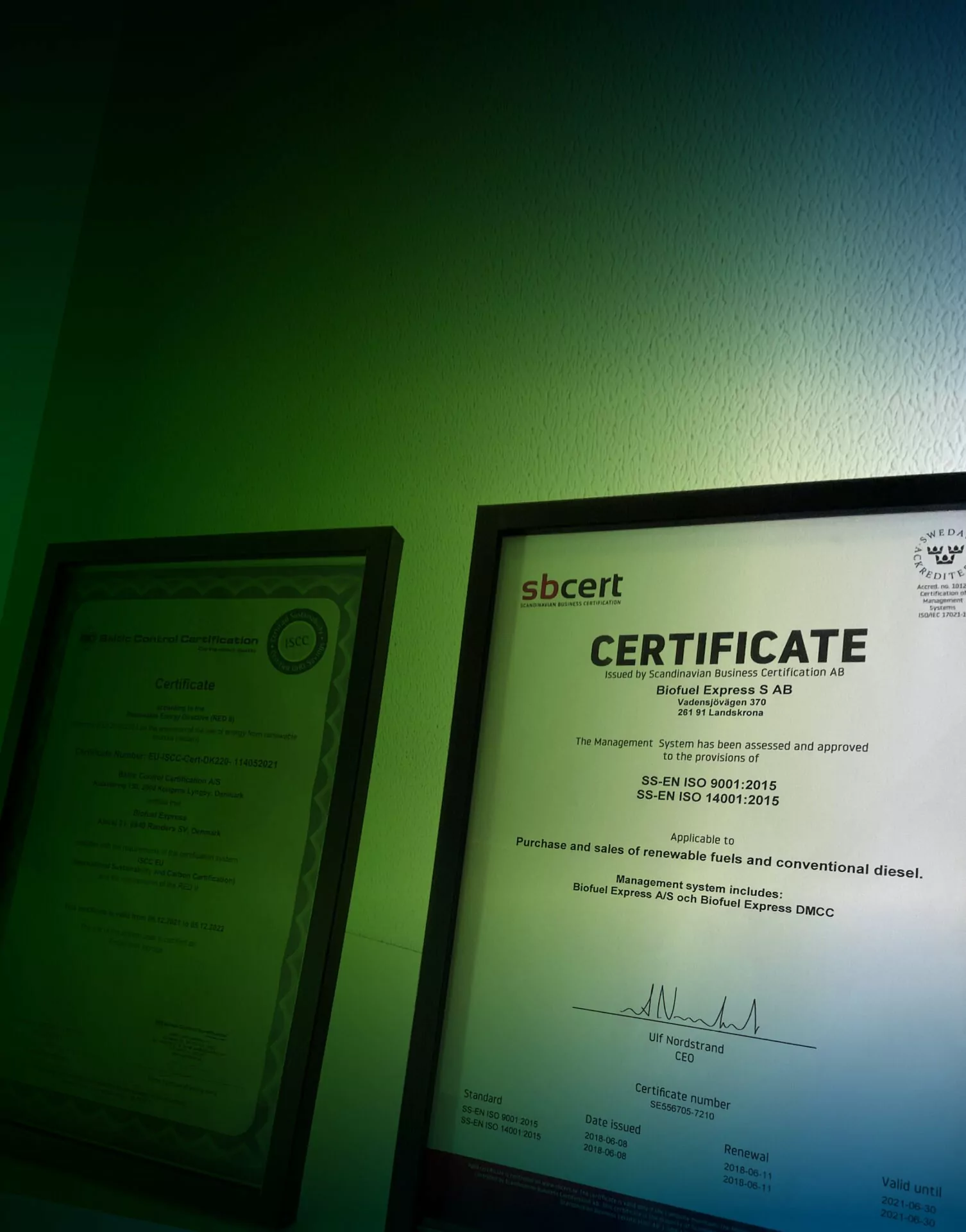
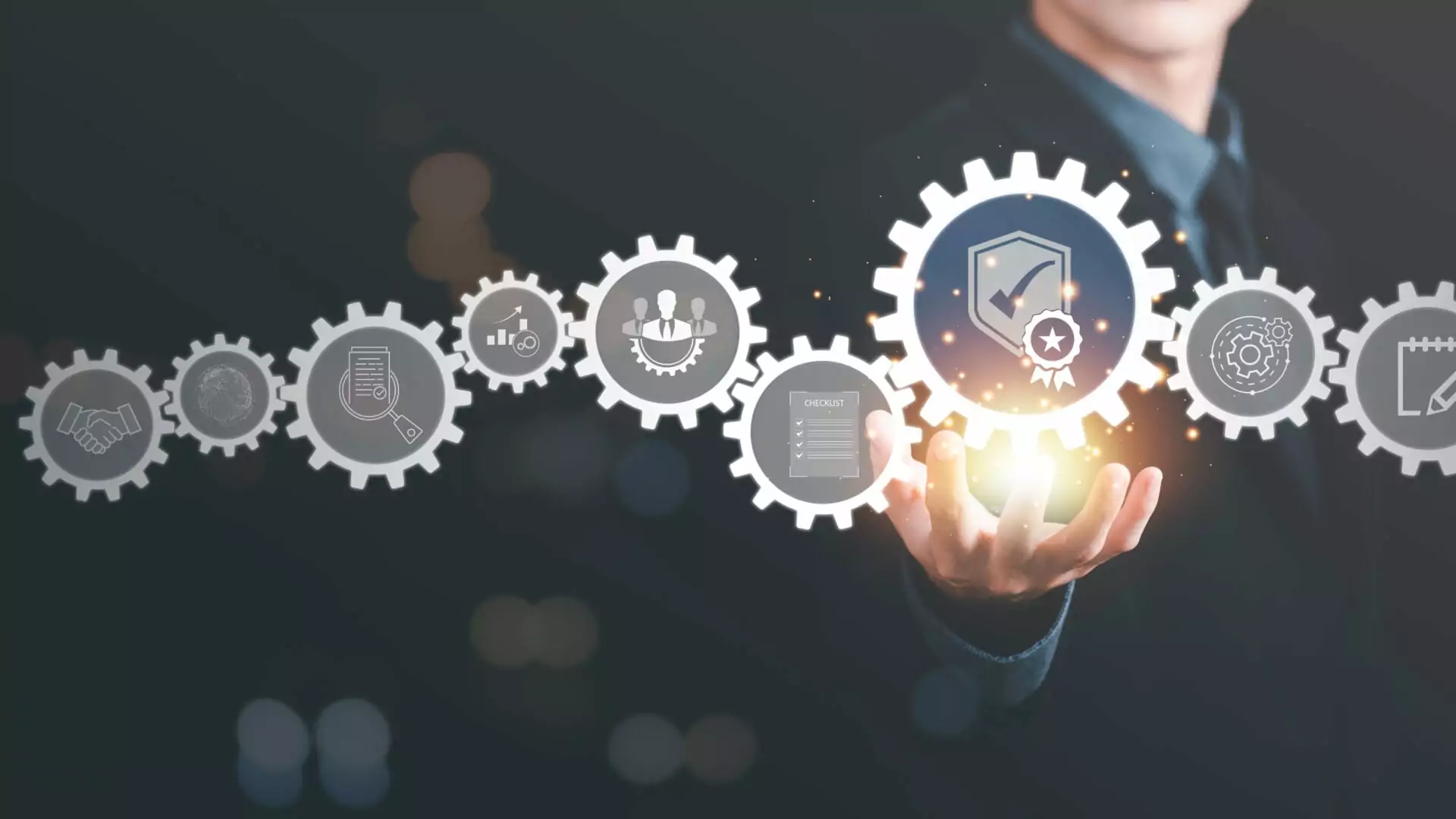
Biofuel Express is ISO-certified in relations to our quality and environmental management systems, which shows our ongoing efforts and strategic focus on the environment and quality assurance of processes.
We are ISO-certified according to ISO 9001 and ISO 14001, which means that our customers and partners can be sure that we systematically improve our quality and reduce our environmental impact, and ensure that we meet our customers’ requirements.
ISO 9001 is an international standard for quality management systems, which means that we actively work continuously to improve our company and processes as well as ensure the quality of our services and products.
ISO 14001 is an international standard for environmental management systems, which ensures that we continuously work to reduce our negative environmental impact and comply with applicable legal requirements.
The certification was performed by Scandinavian Business Certification in accordance with SS-EN ISO 9001: 2015 and SS EN ISO 14001: 2015 standards.
Biofuel Express’ products are ISCC-certified, which is one of the world’s leading certification systems for supply-chain traceability, so that the raw materials are completely traceable throughout the supply chain.
It can vary how much CO2 there is reduced, as it depends on the composition of the raw materials, as well as which product it is.
B100 Biodiesel RME reduces up to 70%, while the HVO100 Renewable Diesel reduces by up to 86%* compared to regular diesel, which is ISCC certified.
The reason why the fuels do not reduce 100% is that certain steps in the production process — viewed across the full cradle-to-grave lifecycle — still generate emissions of their own.
It is especially in the distribution and transportation processes, where there may be a greater CO2 load, e.g. at the collection of the raw materials, or in connection with the harvesting and sowing of the rapeseed to B100. However, continuous work is being done to further reduce these CO2 emissions and achieve an even greater CO2 reduction.
* Based on 2025 verified delivery data. Calculated per the RED III well-to-wheel life-cycle methodology using ISCC-certified mass balance allocation. Proof of Sustainability (PoS) documentation available on request.

Biofuel Express has committed to a science-based target to cut absolute Scope 1 & 2 emissions 42% by 2030, from a 2020 baseline, validated by the Science Based Targets initiative (SBTi) in March 2023. Scope 3 emissions — covering sold products, downstream distribution, employee commuting, and business travel — are being measured and reduced over the same period.
Biofuel Express's long-term target is a 90% absolute emissions reduction from the same 2020 baseline by 2045, with progress reviewed annually by the SBTi.
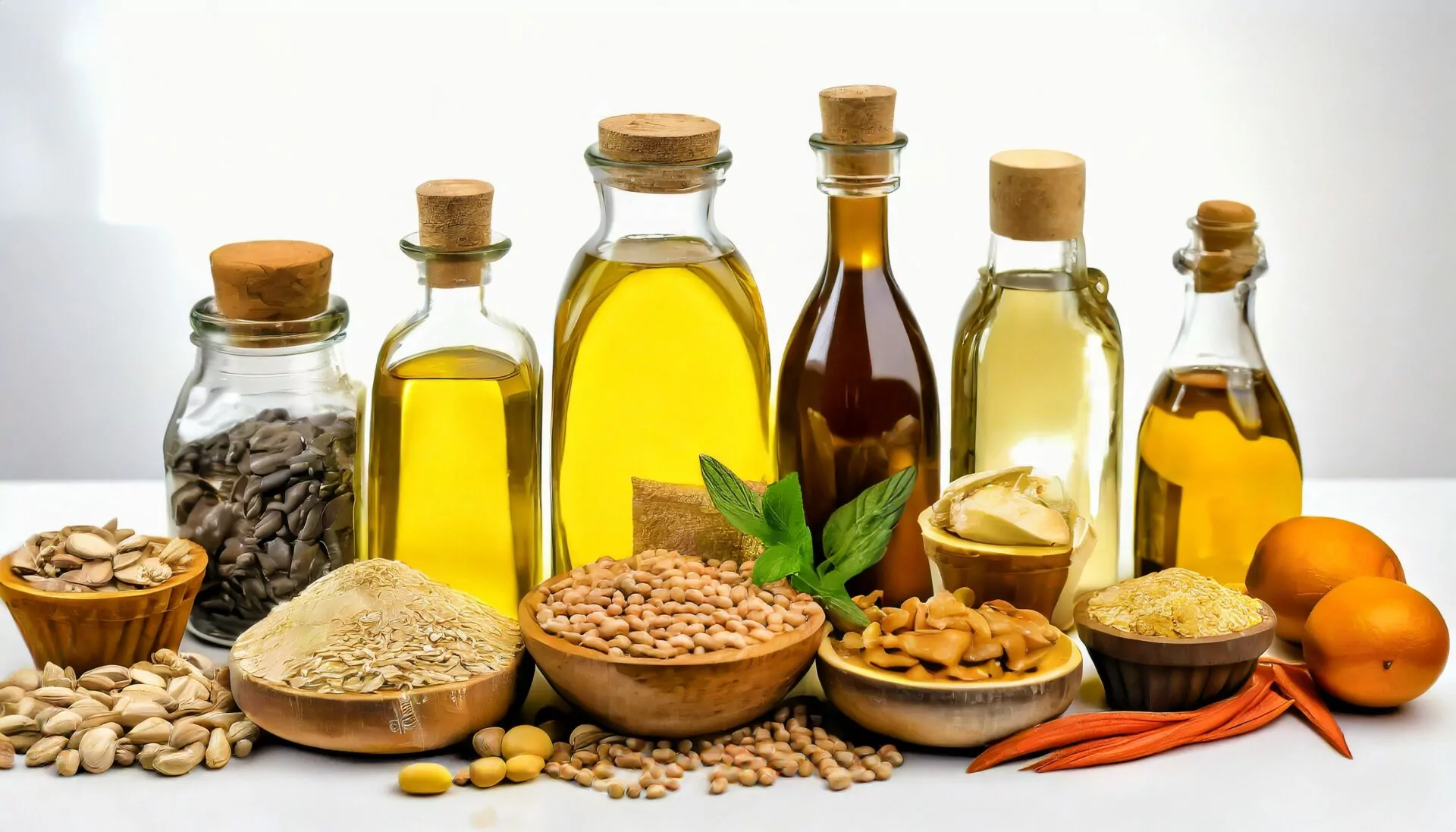
Our raw materials consist mainly of waste and residual products. B100 is a by-product from rapeseed production, where approx. half of the rapeseed is produced for animal feed. HVO100 consists primarily of residues from the meat and fish industry, but also of e.g. used cooking oil or residues and waste from the preparation of vegetable oil. For HVO is it equivalent to 90% of the fuel coming from residues and waste.
It is particularly important for us not to compromise on the quality and origin of the materials, and therefore it must not conflict with food production, deforestation or burden the climate and environment.
| Certification | Covers | Issued by | Certificate # | Valid until | Download |
|---|---|---|---|---|---|
| ISO 9001:2015 | Quality management | Scandinavian Business Certification AB | SE556705-7210 | 2027-06-30 | View ↗ |
| ISO 14001:2015 | Environmental management | Scandinavian Business Certification AB | SE556705-7210 | 2027-06-30 | View ↗ |
| ISCC EU | RED III chain-of-custody & GHG savings | Baltic Control Certification A/S | EU-ISCC-Cert-DK220-11405025 | 2026-12-12 | View ↗ |
| SBTi | Validated science-based emissions target | Science Based Targets initiative | Validated Mar 2023 | Reviewed annually | View ↗ |
Biofuel Express Insight presents easy overview of fuel consumption, full emissions transparency and documentation with just a few clicks.
Its purpose is to provide full insight and thereby work as a tool to reduce their climate impact, as well as document the achieved CO2 savings. In this way, the customers can meet the increased environment and climate requirements of today and in the future:

For the regulatory detail behind these certifications — RED III, the EU Emissions Trading System (ETS2), and CSRD reporting — see our guides to EU Climate Regulations for Transport: The 2026 Guide and Scope 1, 2 & 3 Emissions and Fuel Reporting: A Fleet Operator’s Guide.